
Shop
$15.40 – $45.40
Share on
We do provide express shipping(Within 1-2 Business Days)
Animals are healthy, active and feeding on commercial pellets.
Items are tested before being shipped to you.
We can be reached at 6530 3606 during Business Hours.
Important Note: For Seachem items, they will be collected and ordered from our supplier upon payment. In the event that the item is out of stock, we will promptly contact you and issue a refund for the unavailable item. Thank you for your understanding!
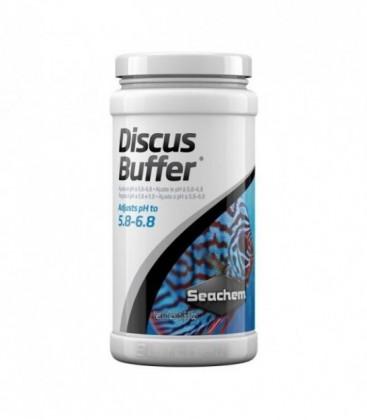
Adjusts pH to 5.8 – 6.8
Replicates the ideal Discus environment
Use with Neutral Regulator to target a pH
Discus fish requires an environment that is low pH and low GH (General Hardness). Seachem Discus Buffer helps to maintain low pH, as well as softens the water by precipitating calcium and magnesium which can then be removed by the aquarium filter.
Discus Buffer contains phosphate buffers and conditioning agents. The product is safe for all freshwater fish acclimated to acid pH.
Benefits of Seachem Discus Buffer
Adjusts water pH to 5.8 – 6.8 acidic
Softens water general hardness
Reproduces the ideal environment for Discus fish
Can use with Neutral Regulator to target a pH
How Discus Buffer Works
Discus Buffer lowers pH and keep it lowered. Discus Buffer also softens water by precipitating calcium and magnesium.
After treating water with Discus Buffer, use Discus Trace to restore the proper level of trace elements and feed NutriDiet Discus Flakes for thriving, healthy Discus.
Neutral Regulator and Discus Buffer can be used in combination to achieve a desired pH when performing water changes or adding top off water.
Directions
Use 1 level teaspoon (5 g) for every 40-80 L (10-20 US gallons) daily until intended pH is reached. Thereafter, use once a month or with water changes as required to maintain pH.For precise dosing use the Seachem Digital Spoon Scale. To raise pH, use Neutral Regulator. To target a particular pH use in combination with Neutral Regulator following the chart. This chart assumes the use of unbuffered water (RO or DI). If water is already buffered use the chart as a starting guide. Use Prime to dechlorinate tap water before doing a water change.
Neutral Regulator and Discus Buffer can be used in combination to achieve a desired pH when performing water changes or adding top off water. The ratio chart below is designed for RO water where there is generally no buffering capacity.
To target a particular pH use in combination with Neutral Regulator following the chart.
Neutral Regulator Discus Buffer pH
1 1 6.8
1 2 6.4
1 3 6.2
1 4 6.1
1 6 6.0
1 9 5.8
FAQ
What is the difference between Neutral Regulator, Discus Buffer, Alkaline Buffer, and Acid Buffer?
A: Neutral Regulator and Discus Buffer are phosphate based buffers providing a very strong and stable buffering system. Alkaline Buffer and Acid Buffer are non-phosphate buffers, which although less stable than a phosphate buffer, are ideal for the planted aquarium where high phosphate levels would lead to an algae problem.
I have a fish only freshwater tank and need to lower my pH. I am afraid to use Discus Buffer because it contains phosphates. What should I do?
A: Phosphate is nothing to be concerned with in a fish only system. Phosphate concerns are a carry over from reef keepers where even a small amount of phosphate can present problems for many corals. It is really an insignificant property in freshwater systems unless it is a planted tank with a very intense lighting system. If you are still concerned about phosphate causing algae problems in a fish-only tank, rest assured that phosphate in itself does not cause algae; algae requires light that is in the blue spectrum for photosynthesis. Standard aquarium light is weak in the blue spectrum and strong in the red range and does not easily support algae growth. This makes the colors on fish seem brighter. It also makes brown fish look more red.
What do I do if Discus Buffer makes my freshwater tank cloudy? How do I clear it up?
A: The cloudiness you experienced is caused by the precipitation of excess calcium and magnesium. In excessively hard water, the precipitation could cause a clouded or chalky hazed appearance. To clear this, you can use a water clarifier (flocculant) like our Clarity. You could also wait for this precipitate to fall out of solution on it’s own (fall to the bottom of the aquarium) but this would take considerably longer than using a flocculate. You can also use a fine mechanical filter (floss or micron) to catch these particles.
Is Discus Buffer safe to use in a planted aquarium?
A: Discus Buffer (phosphate based) is safe to use in a planted aquarium but bicarbonate based buffering systems are generally more accepted in planted aquariums as to not introduce any excess phosphate (which could cause unwanted algae growth). You can achieve a bicarbonate based buffering system with our Alkaline Buffer and Acid Buffer.
What is the difference between Discus Trace and aquarium salt?
A: Common aquarium salt (sodium chloride) is used to impact the density of the water making it harder for parasites to equilibrate to the denser water. Some fish do not mind this therapeutic use of salt, and some fish do mind it. Discus are a fish that will not tolerate this elevated level of sodium in the water. If you keep live plants in your discus aquarium, the plants will not tolerate this either. Discus Trace is a well rounded trace mineral supplement that does not contain sodium and is used to replenish trace and ultra trace minerals that are demonstrated to be necessary for fish health and growth.
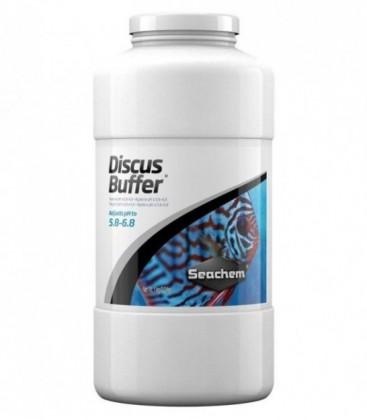
| Weight | 250g, 1kg |
|---|


Reviews
There are no reviews yet.